


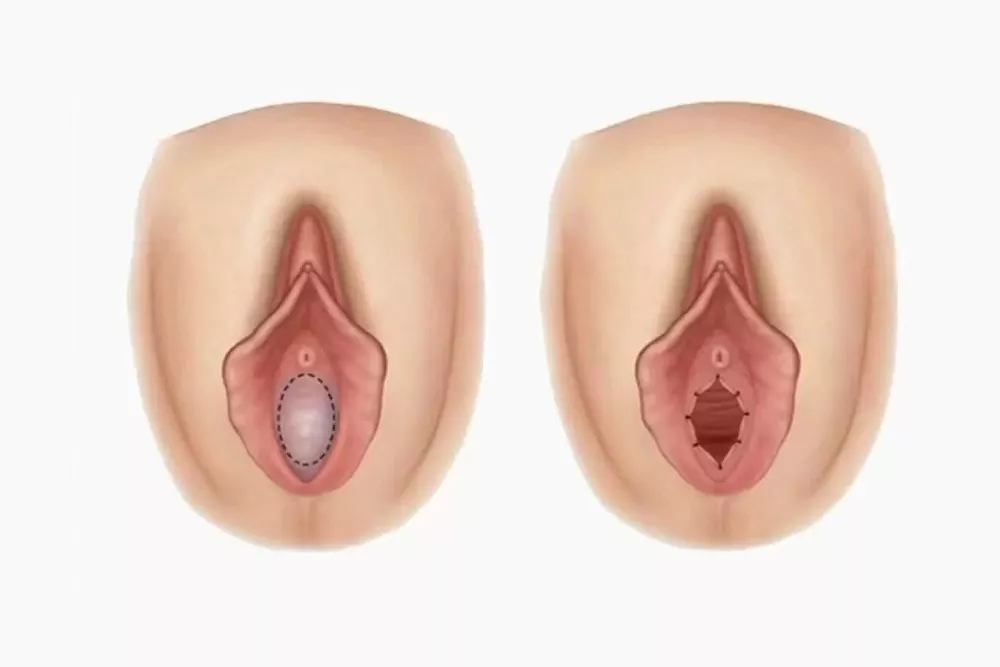
What Is Hymenoplasty in Turkey?
Hymen repair, medically referred to as hymenoplasty, is a minor surgical procedure aimed at repairing or reshaping the hymenal tissue located at the entrance of the vagina. The procedure may be planned by bringing together the remaining tissue fragments or, in suitable cases, by using surrounding tissue to create a new barrier-like structure.
The important point here is that the structure of the hymen can naturally vary from person to person; the appearance or presence of the hymen is not a medically reliable indicator of “virginity.” For this reason, the evaluation for hymen repair is made only through a gynecological examination based on the anatomical structure and the patient’s expectations.
Why Is Hymenoplasty Performed?
Hymen repair is most commonly requested for personal, cultural, social, or psychological reasons. In the medical literature, hymenoplasty is generally addressed as an aesthetic/gynecological reconstructive procedure, and it is stated that the reasons for seeking it may vary depending on factors such as social pressure, anxiety, the need for privacy, or individual preference.
For some people, this procedure may be part of a desire to feel more comfortable, manage their private life according to their own preferences, or cope with certain social pressures. Therefore, the reasons are not uniform; each case should be evaluated together with the person’s history, expectations, and emotional condition.
Who Is Hymenoplasty Suitable For?
Hymen repair may be considered for individuals who are found to be anatomically suitable after a gynecological examination, whose general health condition is appropriate for the procedure, and who can clearly express their expectations from the procedure. The most accurate suitability decision is made by taking into account the remaining tissue structure, the planned method, and compliance with the healing process.
- Individuals who have sufficient tissue structure for the procedure on gynecological examination.
- Individuals whose general health condition is suitable for a minor surgical procedure.
- Individuals who can follow care and follow-up recommendations during the healing period.
- Individuals who have realistic expectations from the procedure.
How Is Hymenoplasty Performed in Turkey?
Hymen repair is performed either by refreshing the remnants of the hymen and joining them with absorbable sutures, or by creating a new structure using small tissue flaps from the vaginal mucosa, depending on the technique to be used. Which technique is chosen varies according to the amount of remaining tissue in the area, the desired outcome, and when the procedure is planned.
After the procedure, the healing process is usually monitored, and in most methods the stitches dissolve on their own over time. Tissue healing may vary depending on factors such as the selected technique, the person’s wound-healing capacity, and how carefully the area is protected.
Is Hymen Repair Permanent?
The permanence of hymen repair may vary depending on the method used. In the literature, short-term “temporary” repairs and “permanent” techniques aimed at longer-term results are discussed under separate categories. Therefore, the answer to the question “Is it permanent?” depends directly on the surgical method chosen.
However, even in techniques described as permanent, the result may be affected by factors such as tissue quality, the healing process, the way the sutures hold, and whether the area is exposed to trauma afterward. In other words, even if the method is planned for the long term, it is not accurate to guarantee the same result for every patient; a clear evaluation is made after examination.
Hymenoplasty Methods in Turkey
Method 1 is the technique in which the remaining parts of the hymen are found and stitched together; the bleeding rate is slightly lower, and it is recommended to be performed 3–4 days before sexual intercourse.
Method 2 is the technique we call the vaginal flap method, which is a reliable method that offers more permanent results, has a naturally higher bleeding rate, and can be performed several months before sexual intercourse.
Both of these procedures can be performed under local or general anesthesia. The person does not feel pain and can return home after the procedure.
Of course, from now on I will write without citing sources.
Is Hymen Repair Painful?
The level of pain felt during hymen repair may vary from person to person. Since the procedure is generally performed under local anesthesia, intense pain is usually not felt during the application. Rather, there may be a mild sense of pressure, touch, or pulling. For this reason, many people feel mild discomfort rather than severe pain during the procedure.
After the procedure, mild aching, stinging, sensitivity, or a burning sensation may be experienced in the first few days. This is often considered a normal part of the healing process. However, if the pain becomes very severe, does not go away for a long time, or appears together with other complaints, specialist evaluation is absolutely necessary.
Is Hymen Repair Safe?
Hymen repair is a controlled procedure when performed under appropriate conditions by an experienced specialist. However, as with any surgical application, there are certain points that need attention. Performing the procedure in a hygienic environment, evaluating the person’s general health condition, and using the correct techniques are all very important in terms of safety.
Nevertheless, no procedure is completely risk-free. Infection, bleeding, sensitivity, or some unexpected situations related to the healing process may occur. Therefore, the person should be informed in detail before the procedure, their expectations should be realistic, and the procedure must be planned under specialist supervision.
Is There Bleeding After Hymenoplasty?
After hymen repair, mild spotting or a very small amount of bleeding may occur. This usually happens due to the tissue healing process and often decreases on its own within a short time. Especially light bleeding seen in the first few days is generally considered normal.
However, heavy bleeding, bleeding that continues for a long time, or bleeding accompanied by foul-smelling discharge and pain is not normal. In such a case, specialist advice should be sought without delay. In order for the healing process to progress properly, it is also very important to follow the recommendations given after the procedure.
Will There Be Scarring After Hymen Repair?
Whether scarring remains after hymen repair may vary depending on the technique used, the person’s tissue structure, and the healing process. In most cases, no clearly noticeable scar is visible from the outside. Since the procedure is performed on sensitive tissues, the healing process progresses individually.
Still, it would not be correct to say that any surgical procedure is completely scar-free. In some people, depending on the tissue structure, very mild marks or different signs of healing may be seen. Therefore, specialist evaluation before the procedure and compliance with care instructions afterward are important for a healthier healing process.
When Can Sexual Intercourse Take Place After Hymenoplasty?
The timing of sexual intercourse after hymen repair may vary depending on the type of procedure performed. In permanent methods, a certain period of time is required for the tissue to heal properly. Having intercourse too early during this period may damage the repaired tissue and affect the success of the procedure. Therefore, the timing of intercourse should definitely be planned according to the recommendation of the specialist who performed the procedure.
In temporary hymen repair applications, the timing of intercourse is generally arranged for a period closer to the procedure. The important point here is that the person should follow the period recommended by the specialist rather than acting according to their own decision. Having intercourse before the healing process is complete or before the recommended time may lead to undesirable results.
Is Hymenoplasty Performed Confidentially?
The hymen repair procedure is generally planned with importance given to the person’s privacy. For this reason, the process is carried out with attention to protecting the client’s personal information. Confidentiality is observed during the examination, evaluation, procedure, and follow-up stages, and information is not shared with third parties without the person’s consent. This is one of the most important aspects of the process for many people.
In addition, most people who apply for hymen repair want to feel safe both physically and psychologically. Therefore, a professional approach, protection of privacy, and careful communication are extremely important. Carrying out the process in an environment where the person feels comfortable and where confidentiality is valued is considered just as important as the procedure itself.
Can the Result of Hymenoplasty Be Noticed?
The answer to the question of whether the result of hymen repair can be noticed may vary depending on the technique used, the person’s tissue structure, and the healing process. In some cases, no obvious external difference may be seen after the procedure. Especially when the procedure is planned appropriately and healing progresses smoothly, the appearance may be more natural.
However, it would not be correct to say that any procedure is completely undetectable. Differences in tissue structure, the way healing occurs, and the person’s anatomical features may affect the evaluation of the result. Therefore, the most accurate approach is to accept that the result may vary from person to person rather than using absolute statements.
What Are the Risks of Hymen Repair?
Although hymen repair is seen as a procedure that is performed in a short time, it may still carry certain risks. As with any surgical intervention, the healing process, the method used, and the person’s general health condition are important here as well. To minimize risks, the procedure should be performed under appropriate conditions and with specialist evaluation.
* Development of infection
* Mild or more than expected bleeding
* Prolonged pain, sensitivity, or stinging sensation
* Tissue healing not progressing as desired
* Irritation or swelling in the procedure area
* Disruption of the repair due to early intercourse or trauma
* A mismatch between the person’s expectations and the result
Hymenoplasty Turkey Prices 2026
Hymen repair prices in 2026 may vary depending on the method to be applied, the clinic where the procedure is performed, the specialist’s experience, and the scope of the planned procedure. For this reason, rather than giving a fixed price, the most accurate information should be provided after a personalized evaluation. Contact us now for Hymen Repair prices.
Frequently Asked Questions
How many days does hymen repair last?
How long hymen repair lasts depends on the method used. While the effect may continue for a longer period with the permanent method, in the temporary method the procedure is generally planned close to intercourse. Therefore, the most accurate evaluation regarding duration should be made according to the technique used.
Is it difficult to sit after hymen repair?
After the procedure, there may be some discomfort while sitting on the first day due to mild sensitivity. However, in most people this is not unbearable and usually decreases within a short time. Avoiding sitting on hard surfaces for long periods generally provides a more comfortable recovery.
Can hymen repair be done on the same day?
Hymen repair can often be planned on the same day after examination and evaluation. For this, the person’s general health condition, suitability, and the method to be used are important. In some cases, however, additional evaluation may be needed before the procedure.
Is walking harmful after hymen repair?
Light-paced walking is generally not harmful after the procedure. However, excessive movement, strenuous exercise, and intense physical activities are not recommended in the first few days. More controlled movement is more appropriate to support tissue healing.
When do the stitches dissolve after hymen repair?
Although the time may vary depending on the suture material used, in most cases the stitches dissolve on their own over time or lose their prominence. Since the healing process progresses differently from person to person, it is not always correct to give an exact time. For this reason, follow-up examinations are important.
Can hymen repair be performed on every woman?
Hymen repair may not be equally suitable for every person. Tissue structure, previous procedures, current health condition, and anatomical features are important in the suitability evaluation. Therefore, a personalized examination should be carried out before the procedure.
Is there a risk of infection after hymen repair?
As with any surgical procedure, there may be a risk of infection after hymen repair. To reduce this risk, hygiene rules should be followed, the recommended care instructions should be taken into account, and the follow-up process should not be neglected. In cases of abnormal discharge, bad odor, or increasing pain, specialist evaluation is important.
Can hymen repair be done at the last minute?
When the temporary method is preferred, hymen repair can be planned shortly before intercourse. However, timing is very important here, and the person should act according to specialist advice rather than making the decision on their own. In last-minute procedures, planning should be done more carefully.
When can daily life be resumed after hymen repair?
Many people can return to daily life shortly after hymen repair. Still, resting in the first few days, avoiding movements that may strain the area, and following care recommendations are important for healing. The time to return to daily life may vary according to individual sensitivity.
Do examination findings change after hymen repair?
Some differences may be observed in examination findings after hymen repair. However, this depends on the type of procedure, the way the tissue heals, and the person’s anatomical structure. Therefore, it would not be correct to speak of a definite result that applies equally to everyone.
