
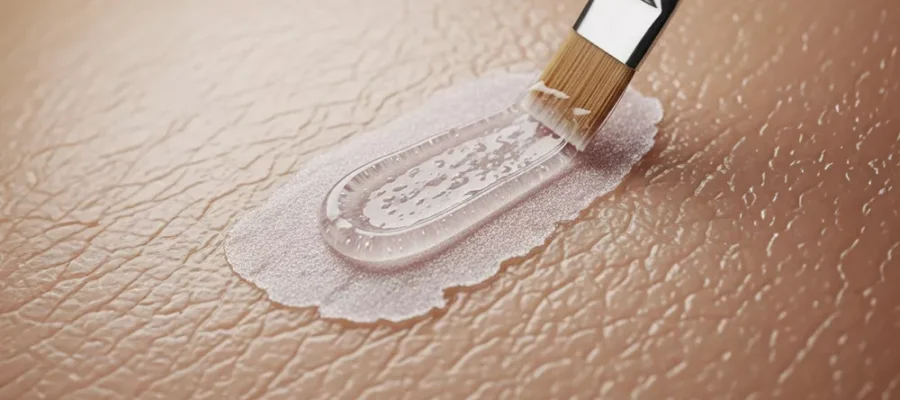
Chemical peeling is one of the effective medical aesthetic treatments aimed at renewing the skin surface and achieving a more vibrant and smoother appearance. In particular, chemical peeling is preferred as a supportive method for many aesthetic concerns such as uneven skin tone, the appearance of spots, acne scars, and fine lines. Today, chemical peeling is planned individually according to the skin’s needs, using different formulations and varying depths of application. In this way, it becomes possible to achieve brighter, more balanced, and healthier-looking skin with chemical peeling.
What Is Chemical Peeling Turkey?
Chemical peeling is a medical skin care procedure that initiates a renewal process in the upper layer of the skin through the controlled application of special solutions to the skin surface. The goal of this treatment is to remove dead skin cells accumulated on the surface, improve the skin texture, and reveal a fresher layer of skin underneath. Chemical peeling should not be considered only a superficial skincare treatment; when planned according to the skin’s needs, it can help reduce the appearance of issues such as blemishes, acne, enlarged pores, dullness, and fine wrinkles. For this reason, it can be preferred both for problem-focused care in younger skin and for renewal support in more mature skin.
Chemical peeling can be performed at different intensities depending on the skin type, the current skin concern, and the individual’s expectations. Mild superficial peels allow a quicker return to daily life with a shorter recovery period, while more intensive formulations may create a more noticeable peeling and renewal effect on the skin. The important point here is to determine the correct type of peel according to the skin’s sensitivity and needs, because not every skin reacts the same way to the same application. When planned correctly, chemical peeling is an effective skin renewal method that contributes to a brighter, more balanced, and healthier appearance.
What Does Chemical Peeling Do?
Chemical peeling helps achieve a smoother, brighter, and more even-toned appearance by creating controlled renewal in the upper layer of the skin. In daily life, many factors such as sun exposure, air pollution, irregular skincare, a history of acne, and aging can cause dullness, discoloration, visible pores, and texture irregularities on the skin surface. At this point, chemical peeling supports the skin’s natural renewal process and contributes to a fresher appearance. Especially by removing damaged cells accumulated on the surface, the skin may begin to look more vibrant and cleaner.
In addition, chemical peeling does not only provide temporary radiance; with regular and properly planned sessions, it can support the overall quality and appearance of the skin. It may help cleanse pores in acne-prone skin, support a more balanced skin tone in people with pigmentation concerns, and contribute to reducing the visibility of fine lines. At the same time, because it creates a cleaner surface that may support the absorption of some skincare products, it can also increase the effectiveness of a skincare routine. In short, chemical peeling is a versatile procedure aimed at improving both the appearance and the textural quality of the skin.
For Which Skin Problems Is Chemical Peeling Used?
Chemical peeling can be preferred for many different skin concerns in order to reduce irregularities on the skin surface and achieve a healthier-looking complexion. Its application area is quite broad, and it can be planned with superficial or more intensive formulations depending on the skin’s needs. It is especially often considered for complaints such as uneven skin tone, post-acne marks, and dull appearance.
- Sun spots and uneven skin tone
- Acne and the appearance of post-acne scars
- Blackheads and visible pores
- Dull, lifeless, and tired-looking skin
- Fine lines and mild signs of aging
- Rough skin texture and uneven surface appearance
- Oily skin structure and excess sebum production
- Mild discoloration and skin dullness
What Are the Types of Chemical Peeling?
The types of chemical peeling are divided into different groups according to how deeply they affect the skin and the ingredients used. Not every peel is applied for the same purpose; some provide more superficial renewal, while others are preferred for more intensive skin concerns. Therefore, when selecting a chemical peel, the skin type, level of sensitivity, pigmentation, acne history, and expected results should all be evaluated together.
- Superficial chemical peeling
- Medium-depth chemical peeling
- Deep chemical peeling
- Peels containing fruit acids
- Peels containing salicylic acid
- Glycolic acid-based peels
- Lactic acid peels for sensitive skin
- Combination-acid chemical peel applications
How Is Chemical Peeling Performed in Turkey?
Chemical peeling is a skin renewal procedure performed by applying special solutions suitable for the skin’s needs to the skin surface in a controlled manner. Before the procedure, the skin is evaluated in detail, taking into account the skin type, sensitivity level, pigmentation pattern, acne history, and the desired results. Then the skin is cleansed and the treatment area is prepared for the application. The selected chemical peeling formulation is left on the skin for a certain period to create a controlled effect. The aim during this process is to remove dead cells from the upper layer of the skin and support the emergence of a livelier and smoother skin appearance from underneath.
The duration of chemical peeling may vary depending on the formulation used and the depth of the peel. In superficial applications, the procedure takes less time, while in more intensive treatments, the skin’s reaction is monitored more carefully. After the procedure, mild redness, sensitivity, or a feeling of tightness may occur. This is generally considered a natural part of the skin’s renewal process. Chemical peeling should not be thought of as a one-time care treatment; rather, it should be considered a professional application that can provide more effective and more balanced results with sessions planned according to the skin problem.
How Should Skin Care Be After Chemical Peeling?
Post-treatment skincare after chemical peeling is one of the most important stages supporting the success of the procedure. Since the skin becomes temporarily more sensitive after the application, irritating ingredients should be avoided and the skin should be supported with gentle products. During this period, it is very important not to rub the skin harshly, not to wash it with hot water, and not to pick peeling skin. To maintain the skin’s moisture balance, support the skin barrier, and ensure a more comfortable healing process, suitable moisturizers should be used regularly. Keeping the skin calm and balanced after chemical peeling supports a smoother renewal process.
Sun protection is also highly important during this period. Since the skin may become more sensitive to the sun after chemical peeling, a high-protection sunscreen should be used and direct sun exposure should be avoided. In addition, acid-based products, retinol-like actives, and other exfoliating skincare products that may stress the skin should not be used for a while. When proper care is followed after chemical peeling, the skin recovers more healthily, the risk of pigmentation can be reduced, and the benefits of the treatment can be enhanced. For this reason, the care routine after the procedure should be planned as carefully as the procedure itself.
How Long Does Peeling Last After Chemical Peeling?
The duration of peeling after chemical peeling may vary depending on the type of peel used, the depth of the application, and the person’s skin structure. In some superficial chemical peel applications, only mild dryness and slight flaking may be seen, while more intensive procedures may result in a more noticeable peeling process. Generally, peeling starts within a short time and gradually decreases as the skin renews itself. During this period, skin peeling is considered part of the controlled renewal effect of the treatment. However, not every chemical peeling procedure causes intense and visibly noticeable peeling.
The most important point during the peeling process is to let the skin heal naturally without forcing it. Picking at crusting or flaking with the hands may cause irritation, sensitivity, and unwanted discoloration. Therefore, the use of moisturizer, sun protection, and soothing skincare practices are very important after chemical peeling. As skin renewal is completed, a brighter, smoother, and fresher appearance begins to emerge. Although the duration of the process differs from person to person, proper care can make this period more comfortable.
Is Chemical Peeling Effective for Treating Blemishes?
Chemical peeling is frequently preferred as one of the supportive and effective methods in blemish treatment. Especially in sun spots, post-acne discoloration, and uneven skin tone, chemical peeling aims to renew the skin surface. Thanks to the application, the dull and uneven appearance of the upper skin layer can be reduced, and a more even-toned complexion can be supported. Chemical peeling should not be seen as a magical procedure that completely eliminates blemishes on its own; however, when planned correctly, it can significantly contribute to reducing the appearance of spots and balancing the skin tone.
Success in blemish treatment is closely related to the depth of the spot, the cause of its formation, the skin type, and regular skincare habits. Some blemishes are more superficial and therefore respond more quickly to chemical peeling, while others may be more resistant and require a session plan. In addition, failure to protect the skin from the sun after the procedure may increase the risk of new pigmentation, so the aftercare process is highly important. When applied with the right patient selection and appropriate formulation, chemical peeling is a powerful skin renewal option that helps the skin appear cleaner, brighter, and more balanced in blemish treatment.
Is Chemical Peeling Good for Acne and Acne Scars?
Chemical peeling is one of the effective procedures that can be beneficial for acne-prone skin and the appearance of some post-acne scars. Especially in oily skin, clogged pores, blackheads, and active acne tendency, it may help purify the skin surface. By removing dead skin cells accumulated on the skin, chemical peeling supports cleaner-looking pores and a more even skin texture. Therefore, when planned regularly, chemical peeling can help control some skin problems that trigger acne formation.
From the perspective of acne scars, chemical peeling may show a positive effect especially on superficial discoloration and mild texture irregularities. However, in deeper atrophic scars, it may not be sufficient on its own and may need to be evaluated together with other treatment methods. The important point here is to distinguish between the active acne period and the scar period and to choose the peel type according to the skin’s needs. When applied correctly, chemical peeling can help both reduce the appearance of acne and improve the smoothness and vitality of the skin after acne.
Does Chemical Peeling Reduce the Appearance of Pores?
Chemical peeling can help the pores look cleaner and less noticeable by removing dead cells accumulated on the skin surface and reducing congestion around the pores. Especially in oily and combination skin, an improvement in the appearance of pores may be noticed as the skin surface becomes smoother. However, the goal here is not to eliminate the pores completely, but to reduce their visibility by creating a smoother skin texture.
The level of effectiveness achieved in pore appearance may vary depending on the acid content used, the skin type, and the regularity of the session plan. Chemical peeling may be sufficient on its own, but in some skin types, oil balance, acne tendency, and the home skincare routine also directly affect the result. For this reason, the most successful approach is to consider chemical peeling as part of a skincare process planned according to the skin’s needs.
Is Chemical Peeling Good for Fine Lines and Wrinkles?
Chemical peeling can help create a smoother surface by renewing the upper layers of the skin in a controlled manner. Thanks to this effect, a noticeable improvement can be achieved especially in superficial fine lines, dull appearance, and mild signs of aging. The skin’s fresher and more vibrant appearance also contributes to making fine lines appear softer.
In deeper wrinkles, however, the effect of chemical peeling may be limited and may not be sufficient on its own. Therefore, the age of the skin, its elasticity, and the depth of the concern are important in the evaluation of fine lines and wrinkles. When the right type of peel is selected, chemical peeling can stand out as a powerful supportive treatment, especially for early signs of aging, by improving overall skin quality.
How Many Sessions of Chemical Peeling Are Needed?
The number of chemical peeling sessions is not fixed; it varies depending on the skin type, age, current skin problem, and the desired result. Current medical content indicates that, especially in superficial applications, a treatment plan involving several sessions is generally preferred, and that results from mild and medium peels appear gradually. For this reason, chemical peeling is usually considered not as a single application, but as a process arranged according to the skin’s needs.
For some individuals, a shorter protocol may be sufficient, while in concerns such as blemishes, acne scars, or texture irregularities, the treatment plan may be extended. The important point here is to monitor how the skin responds after each session and determine the application frequency accordingly. In other words, the correct number of sessions is determined not by a standard number, but by a plan shaped through a personalized skin analysis.
Can Chemical Peeling Be Done in Summer?
Chemical peeling is not a procedure that is completely prohibited in summer, but it should be planned much more carefully during this season. Current sources emphasize that, when proper protection is provided, some more controlled and milder peel types can also be applied during the summer months, whereas in deeper peeling procedures, the risk of pigmentation may increase due to sun exposure. Therefore, whether chemical peeling can be performed in summer should be evaluated according to the depth of the peel and the individual’s discipline in protecting themselves from the sun.
Especially during periods of intense sun exposure, increased skin sensitivity makes post-treatment care even more important. If chemical peeling is planned in summer, precautions such as using more controlled formulations, applying sunscreen regularly, and avoiding direct sun contact are of great importance. For this reason, the goal of summer applications should not be aggressive peeling, but a more balanced approach that supports renewal without putting the skin at risk.
Why Is Sun Protection Important After Chemical Peeling?
After chemical peeling, the skin surface becomes temporarily more sensitive. During this period, skin that is not protected against the sun may face an increased risk of irritation, uneven pigmentation, and the formation of new spots. Current dermatology sources also state that the use of sunscreen and avoidance of UV exposure after the procedure are important both for protecting the skin barrier and reducing the risk of pigmentation.
In addition, sun protection is necessary not only to reduce the risk of side effects, but also to preserve the results expected from the treatment. Because renewed skin is more exposed to external factors, and when not protected, the brightness, tone evenness, and smoothness achieved can deteriorate more easily. Therefore, regular use of sunscreen, choosing shade, and keeping the skin away from irritation during the period after chemical peeling are among the fundamental steps that support the success of the procedure.
Chemical Peeling Turkey Prices 2026
Chemical peeling prices in 2026 may vary depending on the type of peel to be applied, whether a superficial or more intensive formulation is used, how many sessions are planned, the extent of concerns such as pigmentation or acne scars, the clinic where the procedure is performed, and the experience of the specialist carrying out the treatment. Since the treatment plan differs from person to person and mild, medium, or more intensive peel types are selected according to different needs, it would not be correct to provide a single standard price; the healthiest evaluation is made through a personalized plan after a skin analysis. Contact us now for chemical peeling prices.
Frequently Asked Questions
Is chemical peeling painful?
A mild burning, stinging, or warming sensation may occur during chemical peeling, but this is usually short-lived and at a level that most people can tolerate. The level of discomfort felt may vary depending on the intensity of the application.
When should the face be washed after chemical peeling?
When the face should be washed after chemical peeling may vary depending on the formulation used, but in general, it is necessary to act in accordance with the specialist’s recommendation. Gentle care in the early hours is important to prevent irritation of the skin.
When can makeup be applied after chemical peeling?
The time to start wearing makeup after chemical peeling varies according to the skin’s sensitivity. In general, it is more appropriate to apply makeup once the initial sensitivity has subsided and the skin surface has become calmer.
Is redness normal after chemical peeling?
Mild redness after chemical peeling is considered normal. This may be a natural part of the skin’s renewal process and can vary depending on the depth of the treatment.
When can I return to work after chemical peeling?
The time to return to work after chemical peeling depends on the intensity of the procedure. After mild peel treatments, it is possible to return to daily life more quickly, whereas with more intensive applications, sensitivity or peeling lasting a few days may occur.
Can the effects of chemical peeling be seen after a single session?
After a single session of chemical peeling, the skin may appear more vibrant, brighter, and fresher. However, for concerns such as blemishes, acne scars, or texture irregularities, more than one session may be needed for more noticeable results.
Can chemical peeling be applied to sensitive skin?
Chemical peeling can be applied to sensitive skin, but the formulation used and the depth of the application must be selected very carefully. For this reason, personalized planning is of great importance in sensitive skin.
Can chemical peeling cause an increase in pimples afterward?
In some individuals, a temporary increase resembling pimples may be seen after chemical peeling. This may be related to the skin’s cleansing and renewal process, but it does not occur in the same way in every skin.
Is a feeling of tightness normal after chemical peeling?
A mild feeling of tightness and dryness may occur in the skin after chemical peeling. This is generally related to the renewal process of the skin surface and can be made more comfortable with proper moisturization.
When do the results of chemical peeling become visible?
The results of chemical peeling generally become more noticeable as the skin begins to renew itself. Although the initial radiance may be seen earlier, the main effect becomes clearer as the peeling and recovery process is completed.