
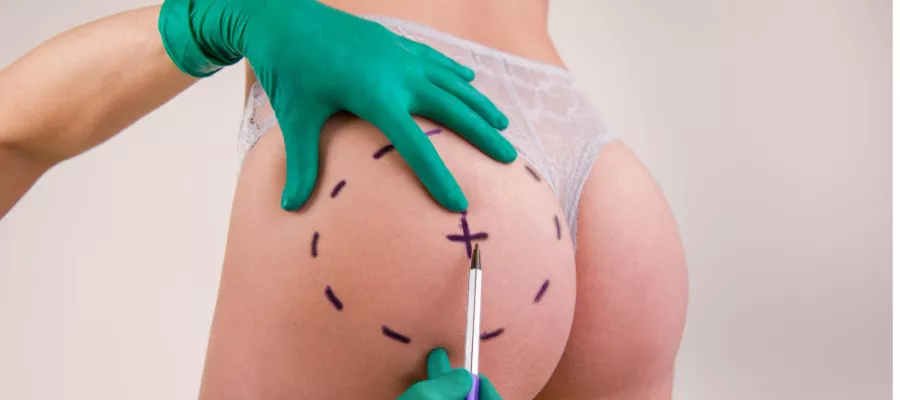
Butt implant is one of the aesthetic surgical procedures performed to achieve a fuller, more defined, and more shaped appearance in people who have volume deficiency in the buttock area. In particular, butt implant is frequently considered for people who genetically have a flat buttock structure, do not have enough donor fat for fat injection, or want a more pronounced projection. With butt implants, the buttock contour can be made rounder, more projected, and more harmonious with overall body proportions. When planning this procedure, the waist, hips, outer thighs, and leg transitions are evaluated together to achieve a natural-looking result.
What Is a Butt Implant?
Butt implant is an aesthetic procedure that uses specially manufactured silicone implants to add volume and shape to the buttock area. The goal of this procedure is not only to enlarge the buttocks, but also to create a firmer, rounder, and more balanced buttock form. In some people, the buttock structure may genetically be flat, small, or insufficient in volume. In others, the desired fullness in the buttock area may be lacking due to weight loss, aging, or body structure. In such cases, butt implants may be preferred to provide a more pronounced and long-lasting increase in volume.
Butt implant surgery stands out as an effective option especially for people who want a clear projection in the buttock area. This is because the implants used in this method provide fixed and noticeable support to the buttocks. As a result, when planned in harmony with body proportions, the waist-to-hip transition can become more aesthetic and the person’s lower body silhouette can gain a more attractive appearance. When planned with the right patient selection and proper technique, butt implant surgery is an aesthetic procedure that can provide both long-lasting and close-to-natural-looking results.
Who Is a Good Candidate for Butt Implants?
Butt implants may be suitable for people who have volume deficiency in the buttock area and want a more prominent buttock shape. In particular, butt implants can be considered an effective option for people who do not have enough donor fat for fat injection, aim for a more projected appearance, or are bothered by the flat appearance of their buttock structure.
- People with significant volume deficiency in the buttock area
- People who genetically have a flat or small buttock structure
- People who want a more projected and rounder buttock appearance
- People who do not have enough donor fat for fat injection
- People aiming to create more balanced body proportions
- People who want more defined buttock contour
- Adult individuals whose general health condition is suitable for surgery
What Is the Difference Between Butt Implants and BBL?
The main difference between butt implants and BBL is the material used to add volume to the buttocks. In butt implants, silicone implants are placed in the buttock area, whereas in Brazilian Butt Lift, known as BBL, fat tissue taken from the person’s own body is used. In other words, butt implants provide volume with artificial but body-compatible special implants, while in a BBL procedure, fat taken from areas such as the abdomen, waist, hips, or thighs is injected into the buttocks for shaping. For this reason, the planning of the two methods, the ideal candidate profile, and the type of volume achieved are different.
Another important difference is the character of the result. Butt implants can provide a stronger volume effect especially in people who want a very pronounced projection and aim for a clearly projected buttock appearance. BBL, on the other hand, can offer a softer transition and a look shaped with the person’s own tissue. However, enough fat reserve is required for BBL to be performed. In very slim individuals or in those who want a more pronounced buttock projection, butt implants may be more suitable. Which method should be preferred is determined according to the person’s body structure, expectations, and the type of result desired in the buttock area.
How Is Butt Implant Surgery Performed?
Before butt implant surgery, the person’s buttock structure, skin quality, muscle structure, and overall body proportions are evaluated in detail. At this stage, not only the size of the buttocks but also the transition between the waist and the buttocks, the height of the buttocks, and how much the buttock projection will be increased are planned. During surgery, implants of the appropriate size and shape are placed in the buttock area according to the chosen technique. The implants are generally inserted through incision areas planned so that they are not noticeable from the outside, and at the end of the procedure the goal is to give the buttock area a fuller structure.
One of the most important points of the surgery is placing the implant in the correct plane and with proper symmetry. This is because a natural appearance depends not only on implant size but also on the placement technique. Implants that are excessively large or not compatible with the body structure may look artificial. For this reason, butt implant surgery should be planned individually, and the result should be evaluated not only in terms of volume increase but also in terms of aesthetic balance. When performed correctly, butt implant surgery can give the buttock area a more shaped, firmer, and more pronounced appearance.
What Types of Implants Are Used in Butt Implant Surgery?
The implants used in butt implant procedures are specially produced to suit the anatomy of the buttock area. These implants are generally made of durable, flexible, and body-compatible silicone. Since the buttock area is constantly in motion, the structure of the implants used here is considered differently from breast implants. They need to be stronger, denser, and resistant to pressure. The goal is not only to add volume, but also to create a form that can adapt to the buttock structure while sitting, walking, and during daily movements.
The types of implants may vary according to their shape, size, and projection features. Some implants provide a rounder fullness, while others may aim for a more natural and anatomical transition. Which implant will be used is determined according to the person’s buttock structure, skin elasticity, existing volume, and desired appearance. What matters here is not choosing the largest implant, but using the implant that best suits the person’s body proportions. When the right implant is selected, the result can look both more aesthetic and more natural.
How Is Butt Implant Size Determined?
When determining butt implant size, the person’s buttock structure, skin elasticity, existing tissue thickness, waist-to-hip ratio, and overall body proportions are first evaluated. This is because using the same implant size for everyone would not be appropriate. How much volume the buttock area can carry should be considered together with the person’s height, weight, and lower body structure. The goal here is not simply to create a larger buttock appearance, but to achieve a balanced and aesthetic result that is harmonious with the body’s overall proportions. For this reason, butt implant size is chosen not only according to the patient’s desired size, but also according to anatomical suitability.
At the same time, skin tension and soft tissue support are also important when determining size. Implants that are chosen too large may create an unnatural appearance and may also place excessive pressure on the tissue in the long term. Implants that are too small may fail to provide the desired degree of prominence. Therefore, when determining butt implant size, both aesthetic expectations and safe surgical limits should be evaluated together. The most successful result is achieved with size choices that are eye-catching but do not look artificial, and that suit the person’s body structure.
What Are the Butt Implant Placement Techniques?
Butt implant placement techniques are determined according to the anatomical plane in which the implant will be placed in the buttock area. In general, the implant is placed inside the muscle, under the muscle, or in specially appropriate planes to add volume to the buttock area. Which technique is preferred depends on the person’s muscle structure, soft tissue thickness, implant size, and the targeted result. The main goal here is to place the implant safely in a way that is not noticeable from the outside and to give the buttock shape a natural projection. The placement technique directly affects both the aesthetic result of the surgery and the healing process.
In choosing the technique, it is very important that the implant looks natural, is placed symmetrically, and behaves harmoniously during movement. Especially very superficial placements may cause the implant to be felt more noticeably, while placement at an appropriate depth can give more natural results. In addition, proper planning is required to reduce the risk of implant displacement and to give the buttock area a more balanced shape. For this reason, butt implant placement techniques are an important stage that requires surgical experience and detailed anatomical evaluation.
Where Is the Incision Made in Butt Implant Surgery?
In butt implant surgery, the incision site is usually planned in areas that will attract the least attention from the outside. The most commonly preferred area is close to the natural crease between the two buttocks. With this approach, the scar can be better concealed and it may be possible to place the implants more evenly on both sides. When planning the incision site, not only aesthetic concerns but also safe implant placement and comfortable access to the surgical field are taken into consideration. The goal is both to ensure surgical control and to reduce later visibility as much as possible.
The visibility of the incision site may vary according to the person’s skin structure, healing process, and care. A scar that may be more noticeable in the early period can become less visible over time. What matters here is that the incision area remains within the natural body folds and is planned in a way that does not disrupt implant placement. The choice of incision site in butt implant surgery is part of the aesthetic outcome and should be considered not only as the entry point for placing the implant, but also as an important element of the post-healing appearance.
How Long Does Butt Implant Surgery Take?
The duration of butt implant surgery may vary depending on the technique to be used, the characteristics of the implant to be placed, the patient’s anatomical structure, and whether any additional procedures will be performed. If the surgery includes only implant placement, it may be completed within a more standard time frame. However, in some people, liposuction or additional contouring procedures may also be planned to make the area around the buttocks look more aesthetic. In such cases, the operation time may be longer. In other words, it would not be correct to give one exact duration for butt implant surgery that applies to everyone; the time depends entirely on personalized surgical planning.
Another factor that affects the operation time is the plane in which the implant will be placed and the symmetry work involved. This is because in buttock aesthetics, it is not enough just to add volume; both sides also need to be equal and harmonious with body proportions. For this reason, it is important for the surgery to be carried out meticulously. In butt implant surgery, the goal is not to finish quickly, but to achieve a safe, controlled, and aesthetically balanced result. Therefore, the quality of planning is just as important as the operation time.
What Type of Anesthesia Is Used in Butt Implant Surgery?
Since butt implant surgery generally involves a more comprehensive and controlled surgical procedure, appropriate anesthesia planning is carried out. In this type of operation, anesthesia support is very important to ensure patient comfort, to allow the surgical area to be handled safely, and to permit careful placement of the implant. Which anesthesia method will be used is determined according to the extent and duration of the surgery, the person’s general health condition, and whether additional procedures are needed. The main goal here is both to ensure patient comfort and to carry out the surgical process in the safest possible way.
Anesthesia planning is clarified through a preoperative evaluation. The person’s previous surgeries, medical history, medication use, and general medical condition are taken into account. Butt implant surgery should not be viewed only as an aesthetic procedure; it should be approached holistically together with anesthesia, surgical technique, and the healing process. Choosing the right anesthesia not only increases comfort during the surgery but also contributes to a more controlled recovery process after the operation.
Are Butt Implants Suitable for Slim People?
Butt implants can often be a suitable option for slim people. Especially when buttock shaping with fat injection is planned but there is not enough donor fat available, butt implants become a strong alternative for providing more noticeable volume. Butt implants are frequently considered in people who are genetically slender, have little fullness in the buttock area, and want a more projected appearance. Therefore, being slim does not automatically create an obstacle for butt implants. On the contrary, in some situations, implants may be the most suitable method for volume enhancement.
However, planning in slim people should be done more carefully because soft tissue thickness may be less. For this reason, the size, shape, and placement plane of the implant must be chosen very accurately. The goal is to ensure that the implant is not noticeable from the outside, creates a natural transition, and is harmonious with the body structure. With proper patient selection and correct surgical planning, butt implants can provide highly successful and aesthetic results in slim individuals. The most important point here is creating a balanced buttock form that does not look artificial despite the person’s slender build.
Can a Firmer Appearance Be Achieved with Butt Implants?
It is possible to achieve a firmer appearance with butt implants. Especially in people who have volume loss, flattening, or a downward sagging appearance in the buttock area, a more pronounced projection can be given to the buttocks with the appropriate size and correct placement technique. In this way, the buttocks not only look fuller, but can also gain a more lifted and more collected form. What matters here is that the implant is planned not only for enlargement, but also to provide aesthetic support to the buttock shape.
In achieving a firmer appearance, not only the size of the implant but also the level of placement and the person’s existing tissue structure are important. If the waist, buttocks, and upper leg transitions are evaluated together, the result can be much more balanced and striking. Implants that are excessively large or incompatible with the body structure may create an artificial appearance instead of a natural lift. For this reason, when aiming for a firmer appearance with butt implants, the goal is not only to add volume, but also to give the buttocks a more aesthetic and balanced posture.
What Is the Recovery Process Like After Butt Implants?
The recovery process after butt implants may vary depending on the extent of the surgery, the technique used, and the person’s tissue structure. In the early period, there may be swelling, tenderness, a feeling of tightness in the buttock area, and a recovery process that requires caution while moving. This period is important for the healing of the area where the implants are placed and for the tissues to adapt to the new form. Paying attention to postoperative recommendations, avoiding sudden movements, and following the planned care process help the healing progress more smoothly.
It is important to be patient during the recovery process because the appearance seen in the first days is not the final permanent result. As swelling decreases and the tissues settle, the true form of the buttocks begins to become clearer. During this period, walking, sleeping position, sitting habits, and daily movements should be planned in a controlled manner. With proper care and a careful recovery process, a more comfortable healing experience and a more successful aesthetic outcome can be achieved after butt implants.
How Should Sitting Be Managed After Butt Implants?
The sitting routine after butt implants is one of the parts of the recovery process that requires the most attention. This is because applying direct and prolonged pressure to the buttock area after surgery can both reduce comfort and make tissue recovery more difficult. For this reason, in the early period, the way of sitting should be controlled and positions that place full weight directly on the buttocks should be avoided as much as possible. The goal is to protect the area where the implants are placed and avoid creating unnecessary pressure.
During this period, how the person should sit, how long they can sit, and which positions are more suitable may vary depending on the surgical plan. In general, more careful, shorter, and supported sitting is recommended. In addition, sleeping and resting arrangements are just as important as sitting. Paying attention to the sitting routine after butt implants not only facilitates recovery but also contributes to a healthier settling of the aesthetic result.
Will There Be Scarring After Butt Implants?
There is a possibility of scarring after butt implants because the procedure is performed through surgical incisions. However, since the incision site is usually planned in the natural crease between the two buttocks or in a less noticeable area, efforts are made to minimize scar visibility as much as possible. In the early period, the incision line may be more obvious, but over time this appearance generally becomes softer and less noticeable. How visible the scar will be may vary depending on the person’s skin structure, healing speed, and postoperative care.
The most important point regarding scars is not only the surgical technique, but also how the healing process is managed. Protecting the area, following the recommended care regularly, and not straining the incision line can contribute to a better healing process. It would not be realistic to expect completely scar-free surgery, but with proper planning and appropriate care, the goal is to make the scar after butt implant surgery as unnoticeable as possible. Ultimately, the aim is to create a balanced healing process in which the aesthetic benefit remains at the forefront.
Is a Natural Appearance Possible After Butt Implants?
A natural appearance is possible after butt implants. The most important factors for this are selecting an implant size that suits the person’s body structure and placing the implant in the correct plane. A natural buttock appearance is not only about volume; the waist-to-hip ratio, buttock projection, upper leg transition, and the symmetry of both sides should all be evaluated together. When proper planning is carried out, the buttock area can look fuller and more defined, while the result can be perceived not as something that has been done surgically, but as a natural form belonging to the body.
Another factor affecting naturalness is having realistic expectations. While implants that are disproportionately large for the body structure may create an artificial appearance, balanced choices provide more aesthetic results. In addition, as the postoperative recovery process is completed and the tissues settle, the appearance of the buttocks becomes more natural. For this reason, a natural appearance after butt implants is the result of both careful surgical planning and a patient recovery process.
What Are the Risks of Butt Implants?
Butt implants are a procedure that can provide successful results with proper patient selection and appropriate surgical planning. However, as with any surgical procedure, butt implant surgery may also involve some risks. Being aware of these risks helps establish healthier expectations before the operation and manage the postoperative period more carefully.
- Risk of infection
- Bleeding and fluid accumulation
- Swelling and prolonged tenderness
- Possibility of implant displacement
- Development of asymmetry
- Noticeable scarring along the incision line
- The implant being felt or noticed from the outside
- A healing process that lasts longer than expected
Are Butt Implants Permanent?
Butt implants are an aesthetic procedure that provides long-lasting and close-to-permanent results. Since the implants used provide volume support to the buttock area, the pronounced form achieved after the procedure can be maintained in the long term. However, this permanence does not mean that there will never be any change. Factors such as aging, weight fluctuations, changes in tissue structure over time, and lifestyle can affect the overall appearance of the buttocks. In other words, while the implant provides permanent volume support, the body’s natural process of change continues.
Another important factor affecting longevity is that the surgery is performed with the correct technique and that the person pays attention to the postoperative care process. With proper patient selection, the right implant choice, and a controlled recovery period, butt implants can provide satisfaction for a long time. The goal here is not temporary fullness, but creating a long-term aesthetic change in the buttock area. For this reason, butt implants are considered one of the strong options for people who expect a long-lasting effect.
Butt Implant Prices 2026
Butt implant prices in 2026 may vary depending on the type of implant to be used, the implant size, the extent of the surgery, whether additional liposuction or different contouring procedures are required, the clinic or hospital where the operation will be performed, and the experience of the specialist performing the procedure. In addition, the person’s anatomical structure, the difficulty level of the surgical plan, and the follow-up process may also affect pricing. For this reason, it would not be correct to give a standard price. Contact us now for butt implant prices.
Frequently Asked Questions
Is butt implant surgery painful?
Since anesthesia is used during butt implant surgery, no pain is felt during the procedure itself. After the surgery, especially in the early period, there may be a feeling of tightness, pressure, and tenderness while sitting or moving, but this process is generally manageable.
When can you walk after butt implants?
Walking after butt implants is generally started in a controlled way in the early period. However, it is important to be careful while moving in the first days, avoid sudden strain, and walk without placing unnecessary pressure on the buttock area.
When can you return to work after butt implants?
The time to return to work varies depending on the person’s rate of healing, the physical intensity of their job, and their postoperative recovery condition. People who work at a desk can usually return sooner, whereas jobs requiring intense movement require more careful planning.
When is it allowed to lie on your side after butt implants?
A certain healing period is required before lying on the side after butt implants. In the early period, sleeping positions that protect the implant area are preferred, and the transition to side sleeping is planned according to how the tissues recover.
Can butt implants rupture?
Butt implants are manufactured to be durable, and they are not expected to rupture easily during daily activities. However, as with any implant procedure, long-term follow-up is important, and evaluation should be carried out if any unusual trauma or problem is felt.
Are butt implants noticeable from the outside?
When butt implants are done with the correct size selection and appropriate placement technique, the risk of being noticeable from the outside is reduced. For a natural appearance, it is very important that the implant is chosen according to the person’s body structure and placed in harmony with the buttock contour.
When can you exercise after butt implants?
The time to return to exercise after butt implants varies depending on the healing process of the surgery. Light walking may be possible earlier, but a more careful and gradual return is needed for intense exercise and activities that strain the buttock area.
Can butt implants shift?
When butt implants are placed with the proper technique and the healing process is managed correctly, the risk of shifting is reduced. However, failure to follow postoperative recommendations, putting too much strain on the area too early, or certain structural factors may affect implant position.
How long does swelling last after butt implants?
Swelling after butt implants is expected in the early period and gradually decreases over time. How long the swelling lasts may vary depending on the person’s healing speed, the technique used, and the body’s response.
Can butt implants be used for life?
Butt implants are planned as a long-term procedure and can provide close-to-permanent results. However, it cannot be said with certainty that they will remain problem-free for life; follow-up over time, body changes, and the condition of the implant should all be evaluated together.