
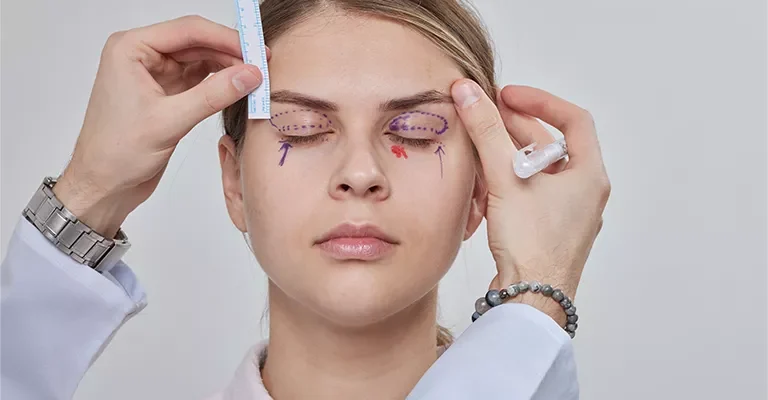
Eyelid Aesthetics
Eyelid aesthetics, also known as blepharoplasty, is surgery that addresses selected changes in the upper eyelids, lower eyelids or both. Treatment may involve removing excess skin, reshaping or repositioning fat and improving the contours around the eyes.
Aging, genetics and changes in tissue support can contribute to heavy upper eyelids, under-eye bags or a more pronounced transition between the lower eyelid and cheek.
The aim is to create a more rested appearance while preserving the natural character and protective function of the eyelids. The appropriate technique depends on individual anatomy, eye health and treatment goals.
What Is Eyelid Aesthetics?
Eyelid aesthetics encompasses procedures that address excess skin, selected fat deposits and structural changes around the eyes.
The eyelids protect the eye surface and support normal blinking and tear distribution. Their function must therefore be considered alongside appearance.
Patients considering eyelid aesthetics should undergo an assessment that distinguishes excess skin from brow descent, true eyelid drooping and other conditions.
These concerns can look similar but may require different procedures.
Why Is Eyelid Aesthetics Performed?
Patients may seek treatment for:
- Excess upper eyelid skin
- A heavy or hooded upper eyelid appearance
- Selected areas of upper eyelid fullness
- Lower eyelid bags
- Loose lower eyelid skin
- An uneven lower eyelid-cheek transition
- Selected asymmetries
- A tired appearance associated with structural eyelid changes
In some patients, overhanging upper eyelid skin can obstruct part of the upper visual field. Surgery may have a functional role when this is confirmed by appropriate assessment.
Blepharoplasty does not treat every cause of visual difficulty, dark circles or wrinkles around the eyes.
How Do the Eyelids Change With Age?
The eye area changes through a combination of skin aging, alterations in fat distribution and weakening of supporting tissues.
Upper eyelid skin may become redundant and fold over the natural crease. Fat compartments may appear more prominent, while other areas lose volume.
In the lower eyelids, changes in support can allow orbital fat to become more visible as bags. Volume loss and cheek descent may also deepen the transition beneath the eyes.
These changes vary between patients. Some occur relatively early because of inherited anatomy, while others develop gradually.
Upper Eyelid Aesthetics
Upper eyelid surgery primarily addresses redundant skin, often called dermatochalasis, and selected areas of fullness.
The incision is usually placed within the natural upper eyelid crease. Excess skin is removed conservatively, and fat may be preserved, repositioned or reduced according to the findings.
The amount of tissue treated should be individualized. Excessive skin removal can interfere with closure, while excessive fat removal can produce an unwanted hollow appearance.
Brow position is also important. A low eyebrow may contribute to upper eyelid heaviness and should not be mistaken for excess eyelid skin alone.
Is Excess Eyelid Skin the Same as Ptosis?
No. Excess skin and true eyelid ptosis are different conditions.
Dermatochalasis describes redundant eyelid skin. Ptosis means that the upper eyelid margin sits lower than it should, often because of changes in the structures responsible for lifting it.
Removing skin alone does not necessarily correct ptosis. Some patients need a separate repair or a combined approach.
An examination helps determine whether heaviness comes from skin excess, a low brow, eyelid ptosis or more than one factor.
Lower Eyelid Aesthetics
Lower eyelid surgery may address bags, excess skin and selected contour changes beneath the eyes.
Planning must account for eyelid support, eye prominence, fat distribution and the relationship with the cheek.
Depending on the anatomy, treatment may involve:
- Conservative fat reduction
- Fat repositioning
- Limited removal of excess skin
- Additional eyelid support
- A combination of these techniques
The aim is a smoother contour without creating excessive hollowness or pulling the eyelid away from its normal position.
Lower Blepharoplasty Techniques
Transconjunctival Approach
This approach uses an incision inside the lower eyelid to access fat compartments.
It may be appropriate when fat prominence is the main concern and substantial external skin removal is not required.
Although it avoids an external skin incision for that part of the procedure, it still involves surgery and carries risks.
Transcutaneous Approach
An incision beneath the lower eyelashes may provide access when skin and other tissues need to be addressed.
The extent of treatment must be carefully planned to preserve eyelid position and closure.
Additional Eyelid Support
Selected patients may need a supporting procedure, such as canthopexy or canthoplasty, depending on eyelid laxity and anatomy.
These procedures are not automatically required for everyone. Their purpose and potential effects should be explained during consultation.
Eyelid Surgery for Under-Eye Bags
Under-eye bags may involve prominent orbital fat, tissue laxity and changes in adjacent cheek support.
Removing every visible fat pocket is not always the best approach. Excessive removal can leave a hollow lower eyelid.
Fat repositioning may redistribute selected tissue to soften the transition between a prominent bag and an adjacent hollow.
The result depends on the cause of the concern. Surgery cannot guarantee that all puffiness will disappear, particularly when swelling has another medical or lifestyle-related cause.
Can Eyelid Aesthetics Remove Dark Circles?
Dark circles have several possible causes, including pigmentation, thin skin, visible vessels and shadows created by hollowness or bags.
Blepharoplasty may improve shadows associated with selected structural changes. It does not directly remove every type of pigmentation.
The consultation should identify the cause before deciding whether surgery, skin treatment or another approach is suitable.
Who Is Suitable for Eyelid Aesthetics?
Suitable candidates are generally adults with relevant eyelid changes, realistic expectations and sufficient health for the proposed procedure.
Assessment is particularly important for patients with:
- Dry-eye symptoms
- Previous eyelid or eye surgery
- Difficulty closing the eyes
- Lower eyelid laxity
- Prominent eyes
- Thyroid-related eye problems
- Other conditions affecting eye health
Age alone does not determine suitability. Men and women may both be assessed for treatment.
Active or inadequately controlled eye conditions may need management before cosmetic surgery is considered.
Consultation and Surgical Planning
The consultation should evaluate appearance and eyelid function together.
Relevant considerations include:
- Upper and lower eyelid shape
- The amount of excess skin
- Fat distribution
- Brow position
- Eyelid closure and support
- Existing asymmetry
- The lower eyelid-cheek transition
- Skin quality
- Previous treatments and scars
- Visual symptoms and eye-surface comfort
Medical conditions, medications, supplements, allergies and smoking or nicotine use should be disclosed.
An eye examination or visual-field assessment may be appropriate, particularly when functional symptoms are present.
The treatment plan should explain the proposed correction, alternatives, incision locations, risks and recovery requirements.
How Is Eyelid Aesthetics Performed?
1. Confirmation of the Treatment Plan
The surgeon confirms whether the upper eyelids, lower eyelids or both require treatment.
Markings account for the natural creases, asymmetry and the amount of tissue that can be safely addressed.
2. Anesthesia
Local anesthesia, local anesthesia with sedation or general anesthesia may be used according to the procedure and medical assessment.
The appropriate option depends on the extent of surgery and whether other treatments are included.
3. Tissue Correction
Upper eyelid surgery may remove selected excess skin and address fat where appropriate.
Lower eyelid surgery may reposition or reduce fat, remove limited skin or improve supporting structures.
The objective is controlled correction rather than maximum tissue removal.
4. Closure and Monitoring
Incisions are closed according to the selected technique. Some sutures require removal, while others dissolve.
After surgery, the patient is monitored and receives instructions about eye care, medication and follow-up.
Can Upper and Lower Eyelid Surgery Be Combined?
Both areas may be treated during one operation when appropriate.
The decision depends on anatomy, health, procedure complexity and recovery requirements.
Some patients may also discuss a brow lift, mid-face lift or another complementary procedure when changes outside the eyelids contribute to the concern.
Each additional treatment should have a clear purpose. Combining procedures is not automatically necessary or preferable.
Preparing for Eyelid Surgery
Preparation may include medical tests or an eye-health assessment.
Patients should provide a complete medication list and follow medical advice about any required adjustments. Prescribed medication should not be stopped independently.
Smoking and nicotine use can affect healing and should be discussed before surgery.
Practical arrangements include transport after discharge, help during early recovery and time away from demanding activities.
Patients should understand how to use prescribed eye medication and how to contact the surgical team urgently if necessary.
Recovery After Eyelid Aesthetics
Swelling and bruising are common during early recovery. Temporary tightness, irritation, sensitivity and dry-eye symptoms may also occur.
The extent varies according to the procedure and individual healing.
Postoperative instructions may include:
- Prescribed eye drops or ointment
- Cold compresses used as directed
- Head elevation
- Gentle incision care
- Temporary restrictions on exercise
- Protection from sun and environmental irritation
- Scheduled follow-up appointments
Many patients see noticeable improvement in bruising and swelling during the first one to two weeks, but deeper healing and the final appearance take longer.
Sleeping Position
Sleeping on the back with the head elevated may be recommended to help manage swelling and avoid pressure.
Follow the surgical team’s instructions rather than applying pressure directly to the eyelids.
Returning to Work and Exercise
Return to work depends on vision, comfort, visible swelling and job requirements.
Strenuous exercise and heavy lifting should wait until the surgeon confirms that healing is sufficient.
Driving should resume only when vision is clear, eye comfort is adequate and medication does not impair alertness.
Contact Lenses and Makeup
Contact lenses may irritate the eyes or place pressure on healing tissues during insertion and removal.
Use glasses until the treating clinician confirms that lenses can be resumed.
Makeup should also wait until the relevant incisions and skin have healed sufficiently.
When Are Stitches Removed?
Suture removal depends on the technique and material used.
Nonabsorbable stitches are removed at a planned follow-up when healing is appropriate. Absorbable stitches may not require removal.
Patients should attend the scheduled review and avoid pulling or removing stitches themselves.
Can Vision Change After Eyelid Surgery?
Ointment, swelling or eye-surface dryness can temporarily affect visual clarity. However, a new visual change should not automatically be dismissed as normal healing.
Sudden reduced vision, severe eye pain, rapidly increasing swelling or other significant eye symptoms require urgent medical assessment.
Rare vision-threatening complications can occur after eyelid surgery. Patients should receive clear emergency instructions before discharge.
What If the Eyes Do Not Close Completely?
Swelling or tissue tightness can affect closure, but incomplete closure needs prompt assessment because it can expose and damage the eye surface.
Persistent closure difficulty may also result from excessive tissue removal or other structural changes.
Patients should contact the treating team rather than simply wait for the problem to resolve. Lubrication or other treatment may be required according to examination findings.
When Will the Results Be Visible?
Changes become easier to assess as swelling decreases.
Early asymmetry, firmness or tightness may improve during healing, but persistent concerns should be reviewed.
The final result develops gradually as tissues settle and scars mature. The timetable differs between upper-only surgery and more extensive combined procedures.
Scars After Eyelid Aesthetics
Upper eyelid incisions are commonly placed in the natural crease.
Lower eyelid access may be beneath the lashes or inside the eyelid, depending on the technique.
Scars often become less noticeable as they mature, but scar-free surgery cannot be guaranteed. Genetics, skin characteristics, wound healing and postoperative care influence their appearance.
Does Eyelid Surgery Change Eye Shape?
The usual goal is to address excess tissue or contour concerns while preserving the patient’s natural appearance.
Some procedures deliberately modify eyelid support or position, and these effects should be discussed in advance.
Unwanted shape changes can also occur through scarring, retraction or other complications. Preserving normal closure and function remains central to planning.
Risks and Possible Complications
Eyelid aesthetics carries potential surgical risks.
These include:
- Bleeding or hematoma
- Infection
- Delayed wound healing
- Dryness or eye irritation
- Persistent tearing
- Changes in sensation
- Asymmetry
- Unfavorable scarring
- Excessive hollowness or residual fullness
- Difficulty closing the eyes
- Lower eyelid retraction or outward turning
- Other changes in eyelid position
- Persistent discomfort
- Anesthesia-related complications
- Rare visual complications, including vision loss
- The need for additional treatment or revision surgery
Risk depends on the operation, anatomy, eye health and medical history.
Appropriate assessment and careful tissue management reduce avoidable risks but cannot guarantee a complication-free result.
How Long Do Eyelid Aesthetics Results Last?
Blepharoplasty can provide lasting improvement, but aging continues after surgery.
Skin elasticity, brow position and facial volume may change over time. Future concerns may therefore develop even after a satisfactory initial result.
Treatment should be described as long-lasting correction rather than permanent prevention of aging.
Sun protection and appropriate skincare support skin health but do not stop all tissue changes.
Can Eyelid Surgery Be Repeated?
Revision may be considered for selected patients with recurrent changes, residual concerns or complications.
Previous surgery can alter tissue availability, scarring and eyelid support, making repeat surgery more complex.
An examination is necessary to determine whether further surgery is appropriate and what can safely be achieved.
Eyelid Aesthetics in Turkey
International patients considering eyelid aesthetics in Turkey should plan for assessment, surgery and postoperative review.
A remote consultation may help establish initial concerns, but an in-person examination is needed to evaluate eyelid support, eye health and tissue quality.
Treatment planning should include:
- Review of medical and eye history
- Assessment of previous procedures
- Examination of the eyelids, brows and cheeks
- Discussion of suitable techniques and alternatives
- Surgery and early monitoring
- Incision and eye-surface review
- Individual advice about return travel
- Access to continued follow-up
The appropriate stay depends on treatment extent and healing. Patients should know how to obtain medical assistance after returning home.
Eyelid Aesthetics Prices
The cost depends on whether the upper eyelids, lower eyelids or both are treated and on the techniques required.
Relevant factors include:
- The extent of skin and fat correction
- Whether additional eyelid support is needed
- Any combined brow or facial procedure
- Anesthesia and operating time
- Facility and monitoring requirements
- Preoperative assessment
- Postoperative care and follow-up
A personalized quotation should follow examination. Patients should confirm what is included and how additional care would be handled.
Contact the practice for current eyelid aesthetics prices.
Frequently Asked Questions
Is eyelid aesthetics the same as blepharoplasty?
Blepharoplasty is the medical term commonly used for surgery addressing selected skin and fat changes in the eyelids. Other eyelid conditions may require different procedures.
At what age can eyelid surgery be considered?
There is no single ideal age for elective adult treatment. Suitability depends on anatomy, symptoms, eye health and expectations.
Can men have eyelid surgery?
Yes. Suitable men and women may be assessed, with planning based on their individual features.
Can upper eyelid surgery improve the visual field?
It may help when excess skin is confirmed to obstruct the upper visual field. It does not treat every cause of reduced vision.
Does blepharoplasty correct eyelid ptosis?
Not necessarily. True ptosis may require a separate repair of the eyelid-lifting mechanism.
Will under-eye bags disappear completely?
Surgery may improve selected structural bags, but complete removal cannot be guaranteed. The cause of puffiness matters.
Can surgery remove dark circles?
It may improve shadows caused by certain contours, but pigmentation and other causes may remain.
Is eyelid aesthetics painful?
Anesthesia is used during surgery. Tenderness, tightness or irritation may occur afterward. Severe or increasing pain requires review.
When can I wear contact lenses?
After the treating clinician confirms that healing and eye-surface comfort are sufficient.
What if my eyes do not close properly?
Contact the surgical team promptly. Incomplete closure can expose the eye surface and should not simply be ignored.
Are scars visible?
Incisions are often placed within a crease or near the lash line, but visibility varies. Some lower eyelid procedures use an internal incision.
Can surgery be performed in summer?
It may be planned in any season when appropriate. Sun protection, aftercare and follow-up remain important.
Will I still look like myself?
Preserving the natural character of the eyes is a treatment goal. The expected changes and potential unwanted effects should be discussed before surgery.
Are the results permanent?
The correction can last, but the eyelids and surrounding face continue to age.
Eyelid Aesthetics with Dr. Hüseyin Kandulu
Eyelid aesthetics requires attention to both appearance and eye protection. Excess skin, fat prominence, brow descent and eyelid support should be assessed together.
A consultation with Dr. Hüseyin Kandulu provides an opportunity to discuss suitable options for the upper eyelids, lower eyelids or both.
The proposed plan should explain expected improvements, alternatives, recovery and potential complications while respecting the patient’s natural facial features.
Contact the practice to arrange an individual assessment for eyelid aesthetics in Turkey.